The Doll

The Doll

Ismail Kadare

Fiction / Historical Fiction / Poetry

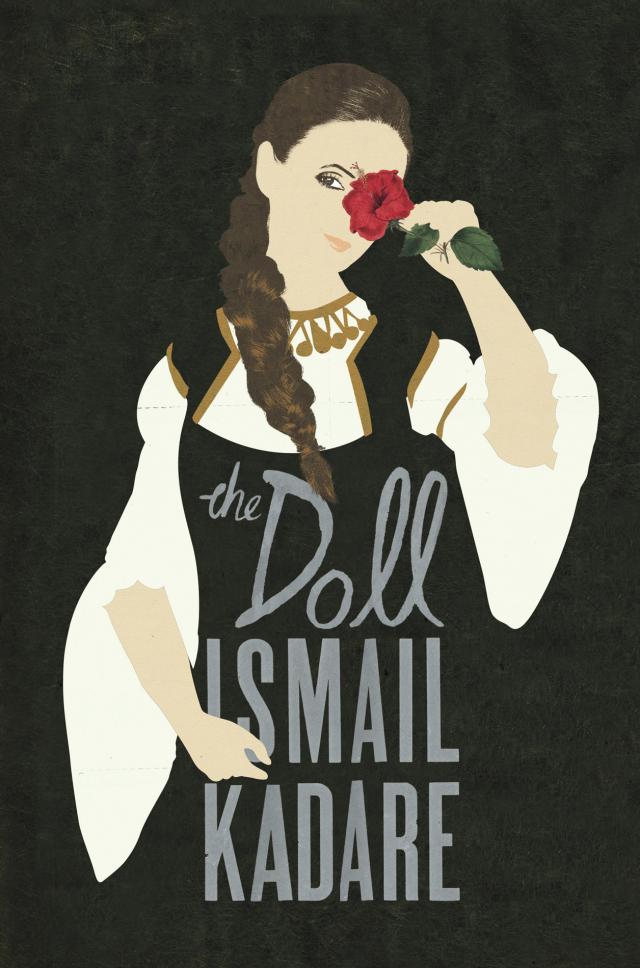
From the winner of the first ever Man Booker International Prize: 'a novelist of dazzling mastery' (Independent)At the centre of young Ismail's world is the unknowable figure of his mother. Naïve and fragile as a paper doll, she is an unlikely presence in her husband's great stone house, with its hidden rooms and infamous dungeon, and is constantly at odds with her wise and thin-lipped mother-in-law. But despite her lightness and unchanging youthful nature, she is not without her own enigmas.Most of all, she fears that her intellectual son – who uses words she doesn't understand, publishes radical poetry, falls in love freely and seems to be renouncing everything she embodies of the old world – will have to exchange her for a superior mother when he becomes a famous writer. Dedicated to the memory of his mother and circling back to his childhood in Albania, The Doll is Ismail Kadare's delicate and disarming tale of home and...
Read online
  • 691
Elegy for Kosovo

Elegy for Kosovo

Ismail Kadare

Fiction / Historical Fiction / Poetry

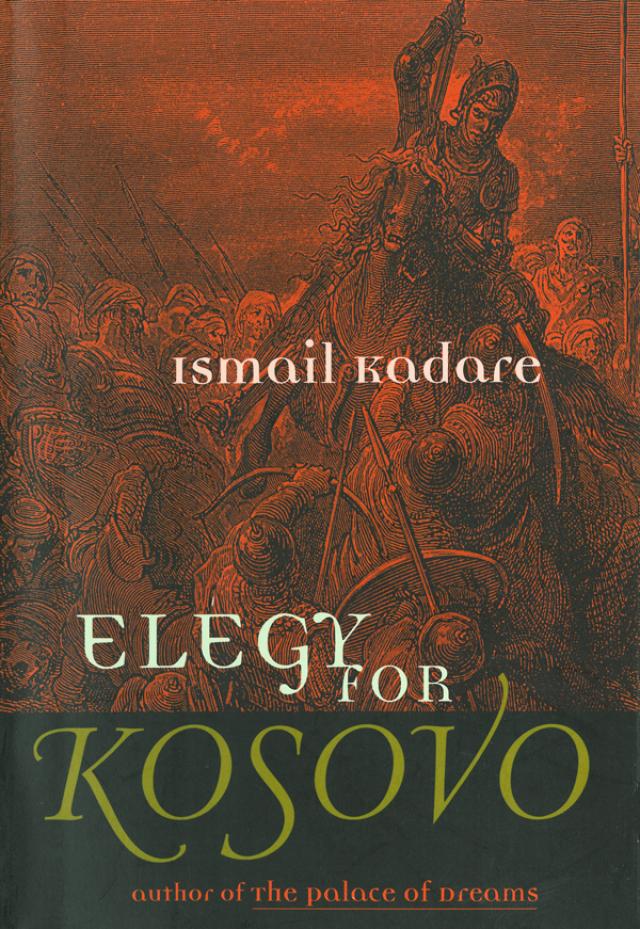
A timely and profound reflection in fiction on war, memory, and the destiny of two peoples by "one of the most compelling novelists writing in any language" (Bruce Bawer, The Wall Street Journal). June 28, 1389: Six hundred years before Serbian leader Slobodan Milosevic called for the repression of the Albanian majority in Kosovo, there took place, on the Field of the Blackbirds, a battle shrouded in legend. A coalition of Serbs, Albanian Catholics, Bosnians, and Romanians confronted and were defeated by the invading Ottoman army of the Sultan Murad. This battle established the Muslim foothold in Europe and became the centerpiece of Serbian nationalist ideology, justifying the campaign of ethnic cleansing of Albanian Kosovars that the world witnessed with horror at the end of the past century. In this eloquent and timely reflection on war, memory, and the destiny of two peoples, Ismail Kadare explores in fiction the legend and the consequences of that defeat. Elegy for Kosovois...
Read online
  • 150
The General of the Dead Army

The General of the Dead Army

Ismail Kadare

Fiction / Historical Fiction / Poetry

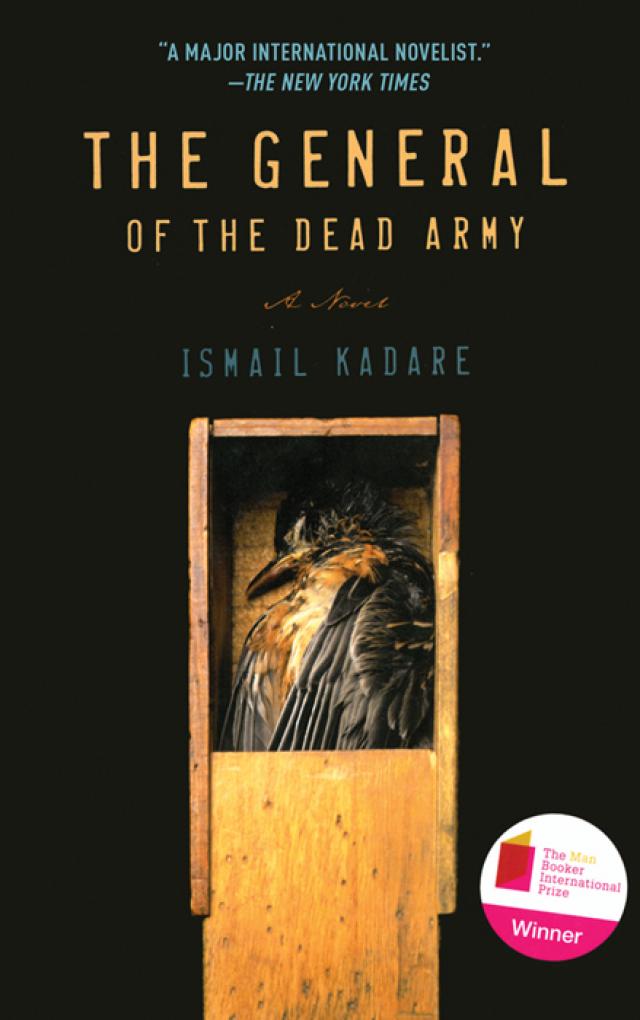
The General of the Dead Army is a moving and timely meditation on war and its consequences by the winner of the inaugural Man Booker International Prize, available again in paperback. Twenty years after World War II, an Italian general—armed with maps, measurements, and dental records—is sent to Albania to recover the remains of his country’s fallen soldiers. A quarrelsome priest joins him, and in rain and sleet they dig up the Albanian countryside—once a battlefield, now a graveyard—checking teeth and dog tags, assembling a dead army in pine-box uniforms. In addition to the brutal weather, they also battle the hostility of the Albanians working for them. This may be an errand of mercy for the general, but the chance to humiliate their one-time conquerors offers the Albanians a welcome vengeance. Fighting the hopelessness of his undertaking, the general finds his movements shadowed by a German general on the same gruesome mission for his own country. In a terrible crescendo at a wedding, the Italian general must answer for the crimes of his country and all countries that have invaded this land of eagles, seeking to destroy its people. Enthralling and poignant, The General of the Dead Army is an elegy for the young people of every country who are sent abroad to die in battle.**
Read online
  • 145
The Concert

The Concert

Ismail Kadare

Fiction / Historical Fiction / Poetry

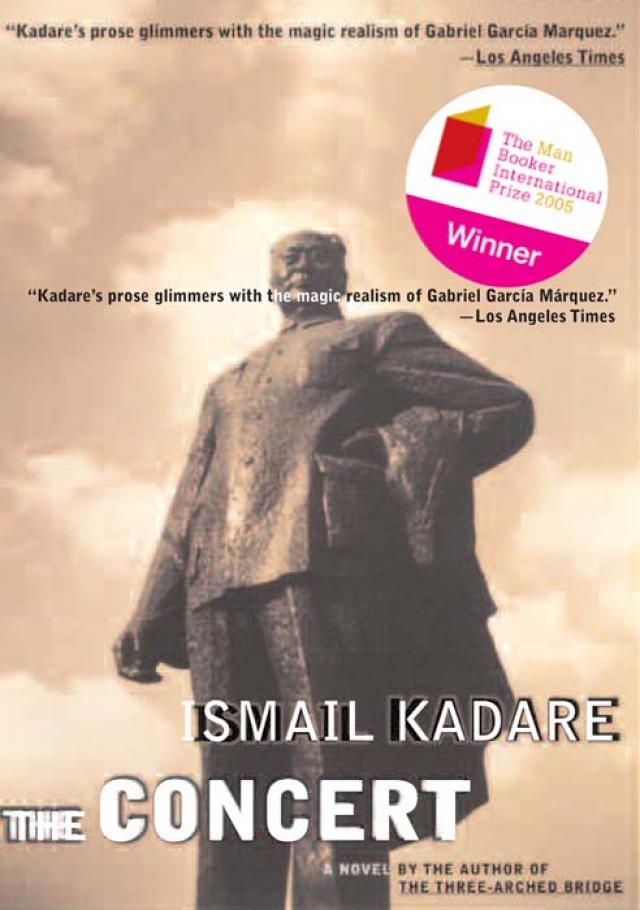
A glimpse into the melting pot of reputations and rumours in the twilight years of communism in Albania, as the morning's orthodoxies become heresies by dinner-time, and everyone must step nimbly to keep out of jail. The fragile nature of political realities in present-day China too, is summed up.From Publishers WeeklySet in the mid-1970s, as the alliance between Albania and Communist China unravels, this subversively inventive satire traces the impact of the zigzagging Albanian party line on the personal lives of a group of friends and associates. These include a jittery Albanian diplomat in Beijing, his jealously insecure wife, an establishment novelist who confronts "the void inside him" and a civil servant who writes an "autocritique" castigating himself for his petty-bourgeois mentality. A Kafkaesque subplot concerns an army officer who's arrested, apparently for refusing to obey an order. Albanian novelist Kadare ( The Palace of Dreams ), who lives in France, sketches a devastating portrait of Mao Zedong as a megalomaniac whose goal is "the brainwashing of the human race." Historical figures like Zhou Enlai and genocidal Cambodian leader Pol Pot appear intermittently in an elliptic narrative spliced with dreams, officers' coerced confessions and short-short stories. China, depicted as a dystopia where simple human relations are stultified and surveillance is a way of life, becomes a mirror image of Albania through Kadare's mordantly ironic vision. Copyright 1994 Reed Business Information, Inc. From Library JournalUnder communism, foreign relations between a smaller country and the huge country that serves as its "host" affect the day-to-day lives of many individuals, especially in the smaller country. An Albanian by birth now living in France, Kadare (The Palace of Dreams, LJ 9/1/93) shows how Albania's relationship with China affects the life of Silva Dibra, a government employee, wife, and mother. The endless succession of her days seem to blend together as Silva worries about her husband, Gjergi, who makes sudden and frequent trips to China, and her brother, Arian, who is in the military. She also thinks constantly about her dead sister, Ana. Through Silva, we learn the thoughts of too many other characters: her husband, daughter, brother, co-workers, endless friends, Chairman Mao, Zhou En-lai, and a stream of other Chinese bureaucrats. There are some good, funny ideas here, and a number of chapters would work effectively as short stories. Strung together, however, they create what is essentially a plotless novel that strains the reader's interest.Olivia Opello, Onondaga Cty. PL, Syracuse, N.Y.Copyright 1994 Reed Business Information, Inc.
Read online
  • 141
The Accident

The Accident

Ismail Kadare

Fiction / Historical Fiction / Poetry

From Man Booker International Prize winner Ismail Kadare comes a dizzying psychological thriller of twisted passions, dual identities, and political subterfuge. Set against the tumultuous backdrop of the war in the Balkans, The Accident closely documents an affair between two young lovers caught in each other’s webs.The Accident opens upon the death of a young man and woman, both Albanian citizens, who perished when their taxi careened off the road, flinging them both from the backseat of the car. The driver survived, though his claims of being distracted by what he saw in the rearview mirror don’t convince officials that it could’ve caused him to lose control of the car, that he must’ve suffered psychological trauma that’s caused him to believe he actually saw what he claims: that the pair was about to kiss.They don’t believe him because, as an investigation into the accident and the lives of its victims are opened, officials learn that the two had been lovers for twelve years. But the nature of their relationship is frustratingly opaque. The man, Besfort Y, was an analyst working for the Council of Europe on western Balkan affairs; the beautiful young woman, Rovena, an intern at the Archaeological Institute of Vienna. They’d been leaving the Miramax Hotel and were on their way to the airport. Though the accident is a bit curious, it’s still tremendously surprising to the police and archivists when the governments of two Balkan countries ask to inspect the file on the accident, and to learn that Serbia and Montenegro had been keeping both victims under surveillance for quite some time. The Serbian response sparks the Albanian secret service into action too, suspicious of an organized political murder. On their way to discounting their theory, the Albanian government unearths a tremendous amount of information on the couple’s perplexing union, including letters that vary wildly in tone, from ordinary correspondence between lovers (mostly from her) to others written in a manner that suggests their relationship was nothing more than that between a call girl and her client—cold, distant, factual (mostly from him). They discover that the relationship had taken a horribly toxic turn within the last year, that Besfort was becoming tired of Rovena, wanted to get rid of her; that she was in agony over his ability to both neglect and oppress her at the same time. They also learned that Besfort Y had many contacts throughout Europe inside most of the human rights organizations, that he was closely tied to political and military information, and that he was the kind of person to be a thorn in the flesh of Yugoslavia and might in a way be called responsible for its bombing—thus Serbia and Montenegro’s interest in him. Still, the war was over at the time of his death, making political motives unreliable.Their investigation also leads them to famous pianist, Liza Blumberg, known as Lulu Blum, who claims to be Rovena’s former lover, and who is convinced that Befort Y intended to murder Rovena, even if it meant that he’d die with her. Lulu later reveals that Besfort often confided top secret, conspiratorial information to Rovena and later regretted it—easy motive for a violent man to turn on his too-informed lover. Correspondence between Rovena and other friends soon confirmed that she was desperate to free herself of Besfort, but hadn’t the willpower. But a witness from Besfort’s life claims that he too was afraid—of what he didn’t know, but that it merely had to do with a woman with whom he “mistakenly” got involved. It was evident that the case was at a standstill; both governments soon felt the case go cold and abandoned their efforts to solve the mystery. It wasn’t until some time later that a single researcher took up the investigation and nearly solved the riddle of the accident. He imagines the last forty weeks of their lives:As the passion fades and hostilities rise between the lovers, both are prone to reminisce about their beginnings. Rovena remembers first hearing about Besfort as a university student, whispers of some quarrel over Israel that would likely result in him losing his teaching job. Upon their first meeting, Besfort invites the then-betrothed Rovena to a three-day conference in central Europe where they sleep together on the first night, their passionate affair immediately consuming. The minute she arrives home, Rovena tells her fiancé that she is in love with another man who is sometimes intimate with other men, as Besfort revealed to her now that Albania had changed enough for bisexuality to be accepted, or at least not feared.From the get-go Rovena can tell that Besfort is haunted—his moods vary wildly, she feels suffocated by him and yet disposable. Still, she decides to devote her life to him, following him throughout Europe whenever he needs to switch countries, living from hotel rooms. Rovena’s tolerance of the arrangement doesn’t last long, however; as the years pass, Rovena begins to resent Besfort for making her feel like a kept woman. Her needs lead her to a one-night stand with a German man at a club. It is not her first infidelity: back when she was still a student and Besfort was traveling, she’d slept with a Slovakian friend too. And some years later, their estrangement allows for her romantic relationship with Lulu, an involvement that began merely as a way to start freeing herself from Besfort’s control and influence. The sexual nature of the women's relationship does make Besfort even more controlling, causing him to call her all the time. Lulu tries everything she can to convince Rovena to forget Besfort, that he’s poisoned her mind and heart. She even goes as far as to propose marriage, but her proposal has the opposite effect on Rovena: all it really does is make Rovena bitter and angry that Besfort isn’t the one who asked her to marry. Rovena’s contact with Besfort increases at this time, leading to jealousy on Lulu’s part and desperate attempts to win Rovena back. Eventually Rovena’s indecision wears on Lulu who soon collapses with frustration, screams for Rovena to return to her warmonger and terrorist.The resulting jealousies and estrangements lead to a transformation in Besfort’s lust, but in no way diminish it. He begins to inch closer to his initial impulses to completely dominate Rovena. He decides that the only way he can establish full control over her is to take her very life in his hands; in other words, to murder her. Without going that far, he instead suggests a divorce, a shift to client and call-girl. An introduction of other men and lovers as a means to not only be free of their own toxic bonds, but to cause a distance that will deepen their lust for one another. Though his mind is twisted and tortured enough that he winds up shooting in her bed one evening, but purposefully in a place that won’t kill her. She doesn’t fight him, knows it’s coming and allows it to happen; she rises after he falls back to sleep, dresses the wound, and also go back to bed. It’s not discussed again.Under this new arrangement, the pair secretly travels to The Hague under the guise of a having a holiday in Denmark. On the second night of their arrival, Rovena wakes up alone in the hotel room. For a moment, she’s startled by her solitude and fears she’s not in the right room. She notices that the aftershave on the bathroom counter is familiar, but none of Besfort’s clothes are hung in the closets as usual. His bags are the same, but inside she finds a folder full of war pictures of dead children—and their addressed to Besfort. As she travels into town, she learns of a tribunal at The Hague and deduces that Besfort must be there, that they’ve traveled in secret because he didn’t want anyone to know he would be at the courts—but was he summoned himself or his he merely a spectator? She never finds out for sure.A week before the accident, Rovena and Besfort are once again apart, though connected through thought. She wants to call him, but restrains herself; he sits a thousand miles away worrying that she might be pregnant. The researcher shockingly stops here, never making it through their last week or the day of the accident. It remains incomplete to him. He knows only of Besfort’s request for a leave of absence from work three days before the accident was granted, but not why the leave was requested or where he was those three days. He knows that Lulu alleged that Besfort murdered Rovena the night before the accident. The researcher attempts to talk to the cab driver again, convinced he holds the key, but the man won’t give him anything new. He speaks again to Lulu, who holds firm that Rovena and Besfort had a maniacal, treacherous love built on dangerous games and the quest to procure a still-imagined level of love and necessity. He needed to own her, thus his reduction of her from idealized lover to call-girl and then, as she surmises, to her ultimate death at his hands. She also felt his impulse to kill her was borne in part from his fear that he’d bared his secret depths to this woman and could no longer accept that truth. To not believe that he killed her would be to not believe in their love. Finally Lulu reveals to the researcher that she knows Besfort killed Rovena because she herself harbored a secret plan to do the very same thing. She is also convinced that Rovena was killed before the accident and was not present in the car at all; that Besfort carried a dummy with him, a doll. The researcher starts at this news—there were indeed police reports that mentioned a dummy. But when he confronts the driver again, whom he now thinks was involved in the cover-up, the man still claims that he’s unsure about what he saw. The researcher is convinced that the driver was startled when Besfort attempted to kiss the doll, or perhaps even the corpse of Rovena, and that’s why he lost control.Lulu then reneges her story about the murder when she's convinced that Rovena is alive, that she attended Lulu's recent concert, her hair dyed blonde, her name know Anevor (Rovena backwards), that they made love before Rovena fled in the early morning hours. In the end, the researcher must surrender to the fact that it’s impossible to deduce the last week of Besfort and Rovena’s lives, or the true nature of their unnatural and obsessive love.
Read online
  • 116
A Girl in Exile

A Girl in Exile

Ismail Kadare

Fiction / Historical Fiction / Poetry

Selected as a Book of the Year 2016 in the IndependentRudian Stefa is called in for questioning by the Party Committee. An unknown girl – Linda B. – has been found dead, with a signed copy of his latest book in her possession. Rudian remembers writing the dedication at the request of Linda's friend, who has since become his mistress but has now disappeared. He soon learns that Linda's family, considered suspect, were exiled to a small Albanian town far from the capital, and that the girl committed suicide.But what really happened to Linda B.? Through layers of intrigue, her story gradually unfolds: how she loved Rudian from a distance, and the risks she was prepared to take so that she could get close to him. A Girl in Exile is a stunning, deeply affecting portrait of life and love under surveillance, infused with myth, wry humour and the chilling absurdity of a paranoid regime.
Read online
  • 112
The Palace of Dreams

The Palace of Dreams

Ismail Kadare

Fiction / Historical Fiction / Poetry

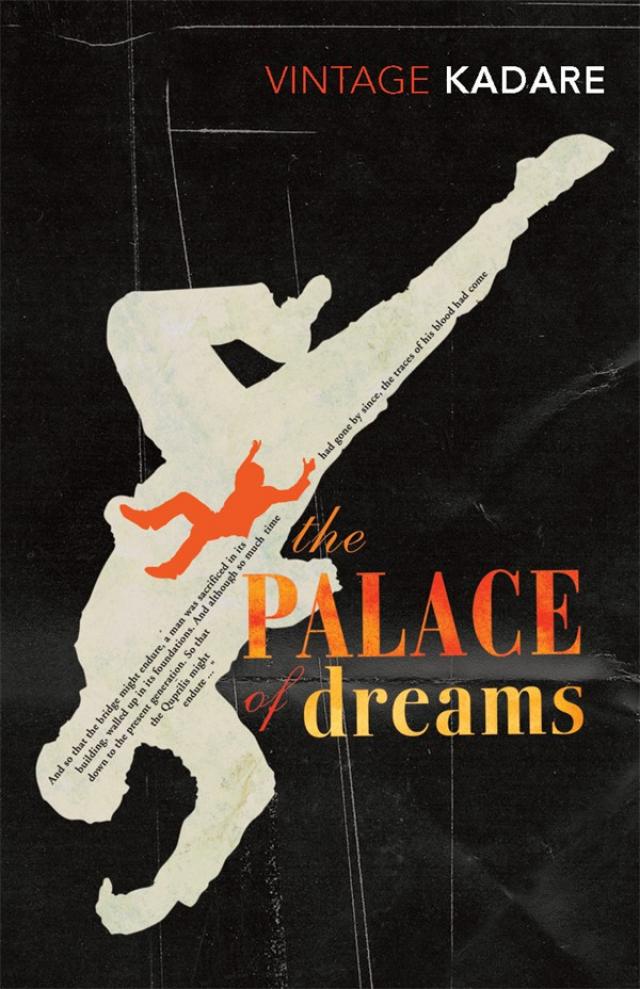
The mysterious Palace of Dreams stands at the heart of a vast but fragile Balkan empire. Inside, workers assiduously sift, sort, classify, and ultimately interpret the dreams of the empire’s citizens. The workers search out Master-Dreams that will provide clues to the destiny of the empire and its Sultan. Mark-Alem, scion of a noble family that has provided viziers to the Sultan from time immemorial, and whose power the Sultan distrusts, is recruited into the Palace of Dreams at the humblest level. He immediately feels the terrible pressure that drives his coworkers, the dread of overlooking a crucial dream whose capture and interpretation might avert political disaster. But he rapidly rises through the hierarchy—only barely ?nding his bearings in one section of the Palace’s labyrinthine passages that represent the entire empire’s consciousness laid bare before he is promoted to another. And the pressure only increases as he becomes familiar with the fates of subversive dreamers and personally responsible for the sorts of dreams that might ruin an entire family. A family like his own with this beautifully bound hardcover edition, The Palace of Dreams is powerfully imagined and beautifully written, a national classic from one of Albania’s premiere literary voices.**
Read online
  • 76
A Dictator Calls

A Dictator Calls

Ismail Kadare

Fiction / Historical Fiction / Poetry

Using a sophisticated and literary version of the ever-popular game of telephone to examine the relationship of writers with tyranny, Ismail Kadare reflects on three particular minutes in a long moment of time when the dark shadow of Joseph Stalin passed over the worldIn June 1934, Stalin allegedly called Boris Pasternak and they spoke about the arrest of Osip Mandelstam. A telephone call from the dictator was not something necessarily relished, and in the complicated world of literary politics it would have provided opportunities for potential misunderstanding and profound trouble. But this was a call one could not ignore. Stalin wanted to know what Pasternak thought of the idea that Mandelstam had been arrested.Ismail Kadare explores the afterlife of this phone call using accounts of witnesses, reporters, writers such as Isaiah Berlin and Anna Akhmatova, wives, mistresses, biographers, and even archivists of the KGB. The results offer a meditation on power and...
Read online
  • 68
The Pyramid

The Pyramid

Ismail Kadare

Fiction / Historical Fiction / Poetry

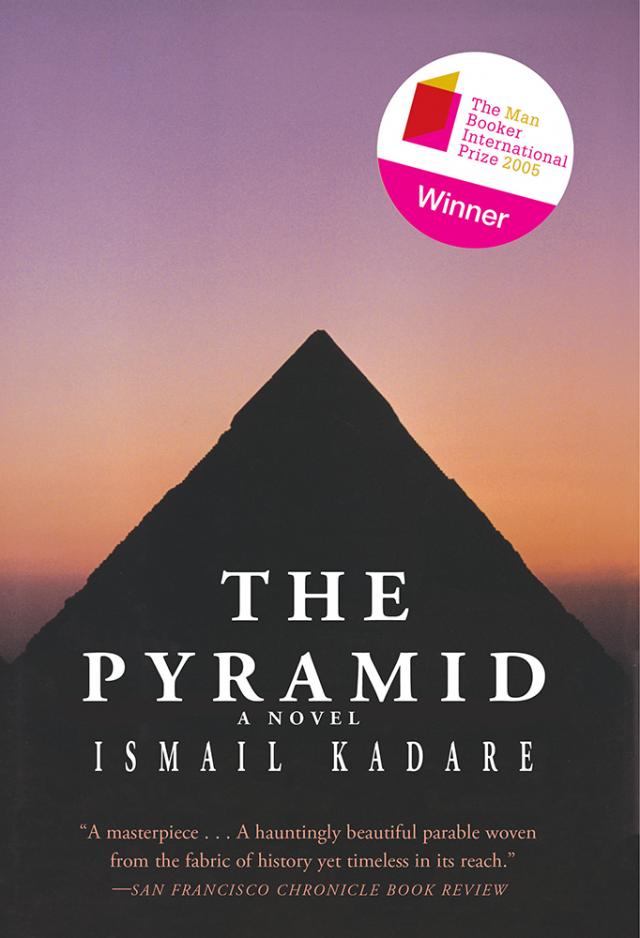
Egypt in the twenty-sixth century BC. The young pharaoh Cheops wants to forgo the construction of a pyramid in his honor, but his court sages hasten to persuade him otherwise. The pyramid, they tell him, is not a tomb but a paradox, designed to appease the masses by oppressing them. It is a symbol of nothing, a useless and infinite project designed to waste the country's wealth and keep security and prosperity, ever the fonts of sedition, constantly at bay. And so the greatest pyramid in the world has ever seen begins to rise. Rumors multiply. A secret police is formed. Conspiracies--real and imagined--swirl around the rising edifice. The most drastic purges follow. By the time the first stone is laid, Cheops's subjects are terrified enough to yield to his most murderous whims. Each time one of the massive stones is hoisted into place, dozens of men are crushed, and there are tens of thousands of stones. . . .
Read online
  • 68
Agamemnon's Daughter

Agamemnon's Daughter

Ismail Kadare

Fiction / Historical Fiction / Poetry

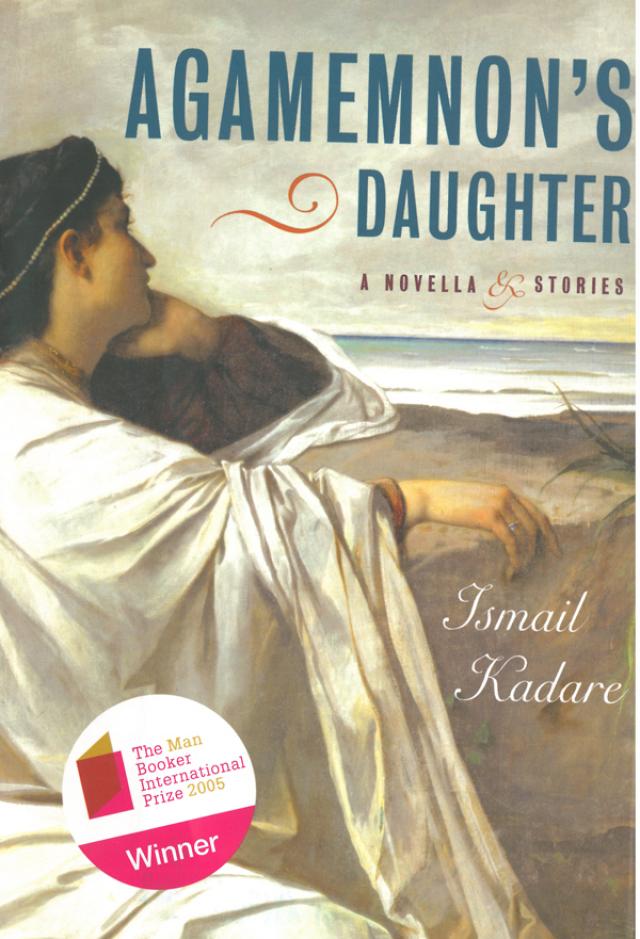
In this spellbinding novel, written in Albania and smuggled into France a few pages at a time in the 1980s, Ismail Kadare denounces with rare force the machinery of a dictatorial regime, drawing us back to the ancient roots of tyranny in Western Civilization. During the waning years of Communism, a young worker for the Albanian state-controlled media agency narrates the story of his ill-fated love for the daughter of a high-ranking official. When he witness the ghostly image of Agamemnon-the Ancient Greek king who sacrificed his own daughter for reasons of State-on the reviewing stand during a May Day celebration, he begins to suspect the full catastrophe of his devotion. Also included are "The Blinding Order," a parable of the Ottoman Empire about the uses of terror in authoritarian regimes, and "The Great Wall," a chilling duet between a Chinese official and a soldier in the invading army of the Tamerlane.
Read online
  • 66
Twilight of the Eastern Gods

Twilight of the Eastern Gods

Ismail Kadare

Fiction / Historical Fiction / Poetry

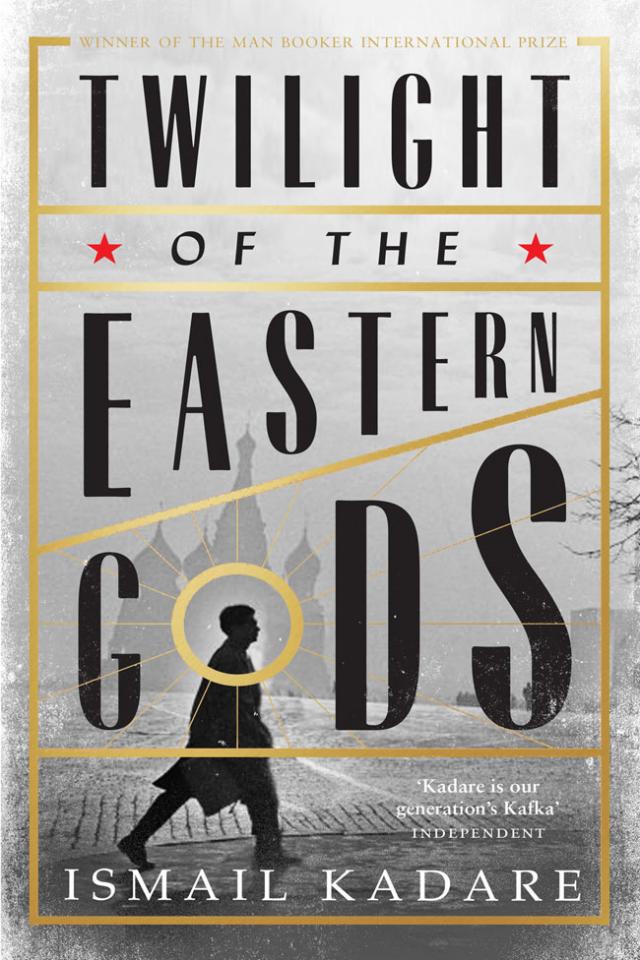
1958. In a dorm room in Moscow, a young writer is woken by the sound of angry voices on the radio. Through the fog of a hangover he hears the news that a novel called Doctor Zhivago has earned its author the Nobel Prize. There is uproar. The author, Boris Pasternak, faces exile, the press hound him and demand that he refuse the award. A few days earlier the young writer found a copy of this book - could those simple pages really be so dangerous? Based on Ismail Kadare's own experience, Twilight of the Eastern Gods is a fictionalised recreation of his time as a student at the prestigious Gorky Institute for World Literature - a strange 'factory of the intellect' set up to produce a new generation of Socialist writers. With its drunken nights, uninspiring professors, specially selected students and enforced Socialist Realism his time at the Gorky Institute brought Kadare to the brink of abandoning writing altogether. In English for the first time, Twilight of the Eastern Gods is a...
Read online
  • 61
Spring Flowers, Spring Frost

Spring Flowers, Spring Frost

Ismail Kadare

Fiction / Historical Fiction / Poetry

In a small town at the foot of the northern highlands in Albania, a decade after the fall of the Communist regime, the harsh blood-for-blood law of the fearsome Kanun mountain folk is emerging from hibernation, like everything else that was forbidden under the fifty years of Communist rule. Mysterious happenings that are two thousand years old, two centuries old, or even just two years old reemerge in daily life. The marriage of a girl and a snake is not just a legend but a news item—a cyclical event that is as much part of the modern world as of the ancient one. Set against this Kafkaesque backdrop, a simple and sensual love story between a painter and a young woman stands out as light against dark. With its rich and somber story of local traditions and universal themes, Spring Flowers, Spring Frost is a masterpiece belonging to Kadare’s purest classical vein.**
Read online
  • 60
183