DAVID BRIN SERIES:

Otherness

Otherness

David Brin

Science Fiction & Fantasy / Science Fiction / Comics & Graphic Novels

From multiple award-winning author David Brin comes this extraordinary collection of tales and essays of the near and distant future, as humans and aliens encounter the secrets of the cosmos--and of their own existence.  In "Dr. Pak's Preschool" a woman discovers that her baby has been called upon to work while still in the womb.  In "NatuLife" a married couple finds their relationship threatened by the wonders of sex by simulation.  In "Sshhh . . . " the arrival of benevolent aliens on Earth leads to frenzy, madness . . . and unimaginable joy.  In "Bubbles" a sentient starcraft reaches the limits of the universe--and dares to go beyond.  These are but a few of the challenging speculations in Otherness, from the pen of an author whose urgent and compelling imaginative fiction challenges us to wonder at the shape and the nature of the universe--as well as at its future.
Read online
  • 479
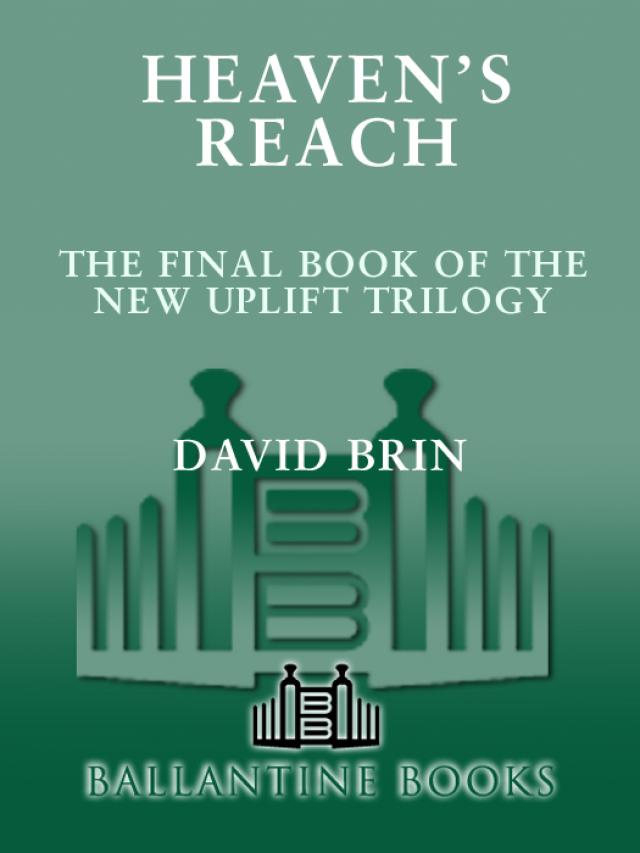
Heaven's Reach

Heaven's Reach

David Brin

Science Fiction & Fantasy / Science Fiction / Comics & Graphic Novels

Winner of the Nebula and Hugo Awards, David Brin brings his bestselling Uplift series to a magnificent conclusion with his most imaginative and powerful novel to date--the shattering epic of a universe poised on the brink of revelation...or annihilation. The brutal enemy that has relentlessly pursued them for centuries has arrived. Now the fugitive settlers of Jijo--both human and alien--brace for a final confrontation. The Jijoans' only hope is the Earthship Streaker, crewed by uplifted dolphins and commanded by an untested human. Yet more than just the fate of Jijo hangs in the balance. For Streaker carries a cargo of ancient artifacts that may unlock the secret of those who first brought intelligent life to the Galaxies. Many believe a dire prophecy has come to pass: an age of terrifying changes that could end Galactic civilization. As dozens of white dwarf stars stand ready to explode, the survival of sentient life in the universe rests on the most improbable dream of all--that age-old antagonists of different races can at last recognize the unity of all consciousness.
Read online
  • 329
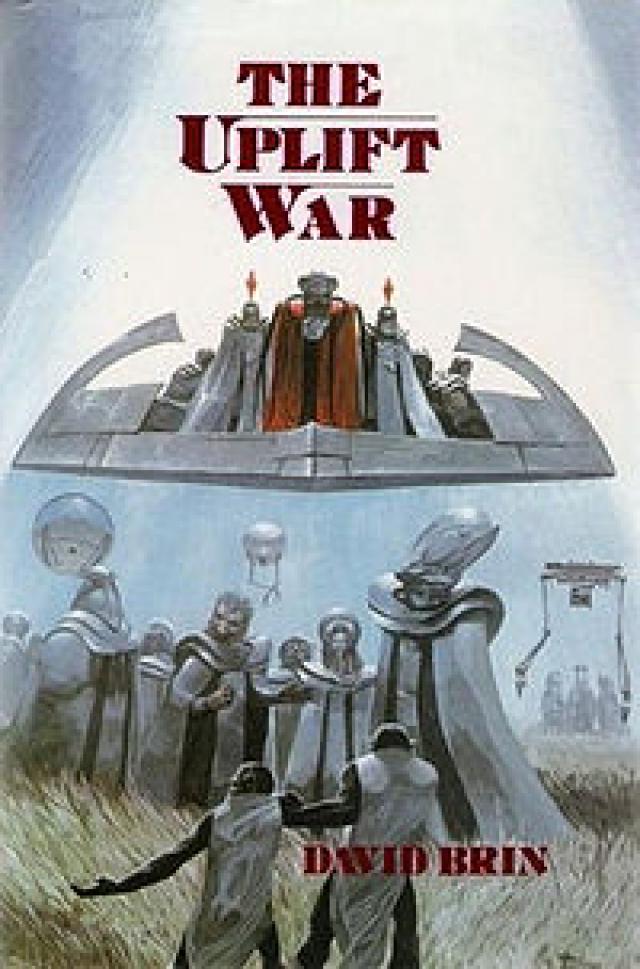
The Uplift War u-3

The Uplift War u-3

David Brin

Science Fiction & Fantasy / Science Fiction / Comics & Graphic Novels

Billions of years ago, an alien race known as the Progenitors began the genetically engineered techniques by which non-intelligent creatures are given intelligence by one of the higher races in the galaxy. Once “Uplifted, these creature must serve their patron race before they, in turn, can Uplift other races. Human intelligence, which developed by itself (and brought about the Uplifting of chimpanzees and dolphins), is an affront to the aliens who plan an attack, threatening a human experiment aimed at producing the next Uplift.
Read online
  • 71
Brightness Reef u-4

Brightness Reef u-4

David Brin

Science Fiction & Fantasy / Science Fiction / Comics & Graphic Novels

Millennia ago the Five Galaxies decreed the planet Jijo off limits. But in the last thousand years six races have begun resettling Jijo, embracing a pre-industrial life to hide their existence from the Galactics. Overcoming their differences, the Six have built a society based on mutual tolerance for one another and respect for the planet they live on. But that has all changed with an event the Six have feared for hundreds of years: the arrival of an outside ship. David Brin has returned to his popular Uplift universe in this, the first book of a new trilogy.
Read online
  • 70
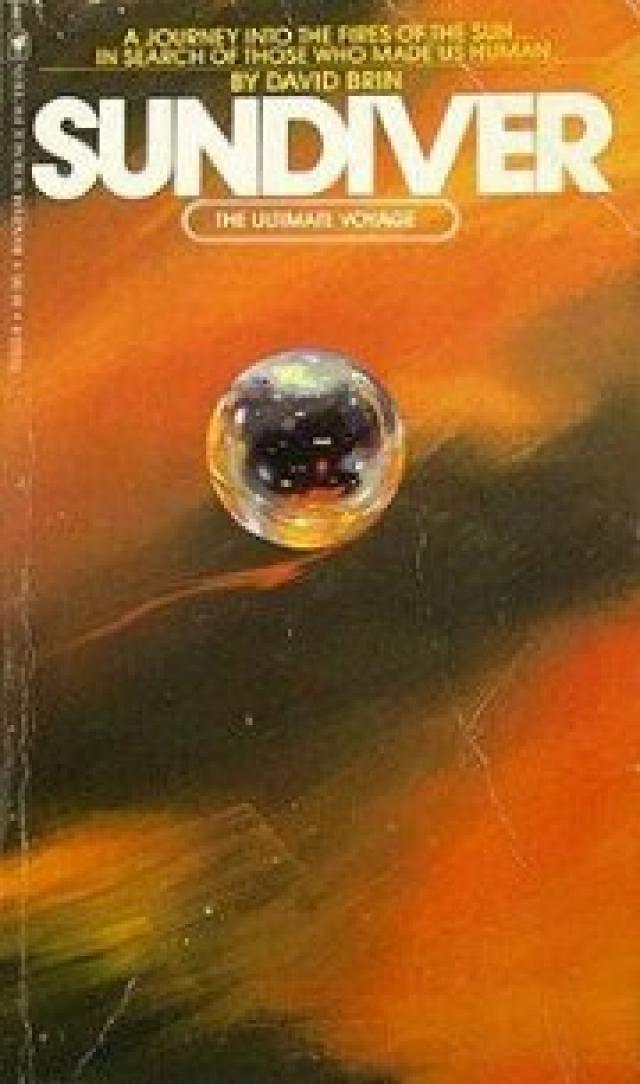
Sundiver u-1

Sundiver u-1

David Brin

Science Fiction & Fantasy / Science Fiction / Comics & Graphic Novels

No species has ever reached for the stars without the guidance of a patron — except perhaps mankind. Did some mysterious race begin the uplift of humanity aeons ago? Circling the sun, under the caverns of Mercury, Expedition Sundiver prepares for the most momentous voyage in history — a journey into the boiling inferno of the sun. The book was nominated for Locus Award for Best First Novel in 1981.
Read online
  • 69
Infinity's Shore u-5

Infinity's Shore u-5

David Brin

Science Fiction & Fantasy / Science Fiction / Comics & Graphic Novels

For the fugitive settlers of Jijo, it is truly the beginning of the end. As starships fill the skies, the threat of genocide hangs over the planet that once peacefully sheltered six bands of sapient beings. Now the human settlers of Jijo and their alien neighbors must make heroic-and terrifying-choices. A scientist must rally believers for a cause he never shared. And four youngsters find that what started as a simple adventure-imitating exploits in Earthling books by Verne and Twain-leads them to the dark abyss of mystery. Meanwhile, the Streaker, with her fugitive dolphin crew, arrives at last on Jijo in a desperate search for refuge. Yet what the crew finds instead is a secret hidden since the galaxies first spawned intelligence-a secret that could mean salvation for the planet and its inhabitants…or their ultimate annihilation.
Read online
  • 68
Kiln People

Kiln People

David Brin

Science Fiction & Fantasy / Science Fiction / Comics & Graphic Novels

Just about everyone’s had a day when they’ve wished it were possible to send an alternate self to take care of unpleasant or tedious errands while the real self takes it easy. In Kiln People , David Brin’s sci-fi-meets-noir novel, this wish has come true. In Brin’s imagined future, folks are able to make inexpensive, disposable clay copies of themselves. These golems or “dittos” live for a single day to serve their creator, who can then choose whether or not to “inload” the memories of the ditto’s brief life. But private investigator Albert Morris gets more than he, or his “ditective” copies, bargain for when he signs on to help solve the mysterious disappearance of Universal Kilns’ co-founder Yasil Mahara
Read online
  • 53
The Transparent Society: Will Technology Force Us to Choose Between Privacy and Freedom?

The Transparent Society: Will Technology Force Us to Choose Between Privacy and Freedom?

David Brin

Science Fiction & Fantasy / Science Fiction / Comics & Graphic Novels

In New York and Baltimore, police cameras scan public areas twenty-four hours a day. Huge commercial databases track you finances and sell that information to anyone willing to pay. Host sites on the World Wide Web record every page you view, and “smart” toll roads know where you drive. Every day, new technology nibbles at our privacy.Does that make you nervous? David Brin is worried, but not just about privacy. He fears that society will overreact to these technologies by restricting the flow of information, frantically enforcing a reign of secrecy. Such measures, he warns, won’t really preserve our privacy. Governments, the wealthy, criminals, and the techno-elite will still find ways to watch us. But we’ll have fewer ways to watch them. We’ll lose the key to a free society: accountability.The Transparent Society is a call for “reciprocal transparency.” If police cameras watch us, shouldn’t we be able to watch police stations? If credit bureaus sell our data, shouldn't we know who buys it? Rather than cling to an illusion of anonymity-a historical anomaly, given our origins in close-knit villages-we should focus on guarding the most important forms of privacy and preserving mutual accountability. The biggest threat to our freedom, Brin warns, is that surveillance technology will be used by too few people, now by too many.A society of glass houses may seem too fragile. Fearing technology-aided crime, governments seek to restrict online anonymity; fearing technology-aided tyranny, citizens call for encrypting all data. Brins shows how, contrary to both approaches, windows offer us much better protection than walls; after all, the strongest deterrent against snooping has always been the fear of being spotted. Furthermore, Brin argues, Western culture now encourages eccentricity-we’re programmed to rebel! That gives our society a natural protection against error and wrong-doing, like a body’s immune system. But “social T-cells” need openness to spot trouble and get the word out. The Transparent Society is full of such provocative and far-reaching analysis.The inescapable rush of technology is forcing us to make new choices about how we want to live. This daring book reminds us that an open society is more robust and flexible than one where secrecy reigns. In an era of gnat-sized cameras, universal databases, and clothes-penetrating radar, it will be more vital than ever for us to be able to watch the watchers. With reciprocal transparency we can detect dangers early and expose wrong-doers. We can gauge the credibility of pundits and politicians. We can share technological advances and news. But all of these benefits depend on the free, two-way flow of information.Amazon.com ReviewDavid Brin takes some of our worst notions about threats to privacy and sets them on their ears. According to Brin, there is no turning back the growth of public observation and inevitable loss of privacy--at least outside of our own homes. Too many of our transactions are already monitored: Brin asserts that cameras used to observe and reduce crime in public areas have been successful and are on the rise. There's even talk of bringing in microphones to augment the cameras. Brin has no doubt that it's only a matter of time before they're installed in numbers to cover every urban area in every developed nation.While this has the makings for an Orwellian nightmare, Brin argues that we can choose to make the same scenario a setting for even greater freedom. The determining factor is whether the power of observation and surveillance is held only by the police and the powerful or is shared by us all. In the latter case, Brin argues that people will have nothing to fear from the watchers because everyone will be watching each other. The cameras would become a public resource to assure that no mugger is hiding around the corner, our children are playing safely in the park, and police will not abuse their power.No simplistic Utopian, Brin also acknowledges the many dangers on the way. He discusses how open access to information can either threaten or enhance freedom. It is one thing, for example, to make the entire outdoors public and another thing to allow the cameras and microphones to snoop into our homes. He therefore spends a lot of pages examining what steps are required to assure that a transparent society evolves in a manner that enhances rather than restricts freedom. This is a challenging view of tomorrow and an exhilarating read for those who don't mind challenges to even the most well-entrenched cultural assumptions. --Elizabeth LewisFrom Publishers WeeklyScience fiction writer Brin (The Uplift War) departs from technological fantasy to focus on the social and political ramifications of our information age. While addressing the technology-vs.-privacy debate, he offers an informed overview of the issues and a useful historical account of how current policies evolved. Also beneficial are his descriptions of the different viewpoints on encryption software, online anonymity, the Clipper Chip and techno-jargon. But when Brin opines on these topics, the book suffers from superficiality. He appends remarks to the end of each chapter as this: "When you've been invited to a really neat party, try to dance with the one who brought you." His main point--that information and criticism should flow unrestricted--is lost in a melange of armchair social science theory and unrelated observations on the media, morality, identity and manners. After making a thoughtful case for discouraging encryption and encouraging free speech on the Web, he undercuts his position by calling for e-mail civility, "because people who lash out soon learn that it simply does not pay," then states that a balance can be achieved between these two extremes. Despite a strong beginning, Brin's book ultimately lacks clarity and originality. Copyright 1998 Reed Business Information, Inc.
Read online
  • 50
Star Wars on Trial

Star Wars on Trial

David Brin

Science Fiction & Fantasy / Science Fiction / Comics & Graphic Novels

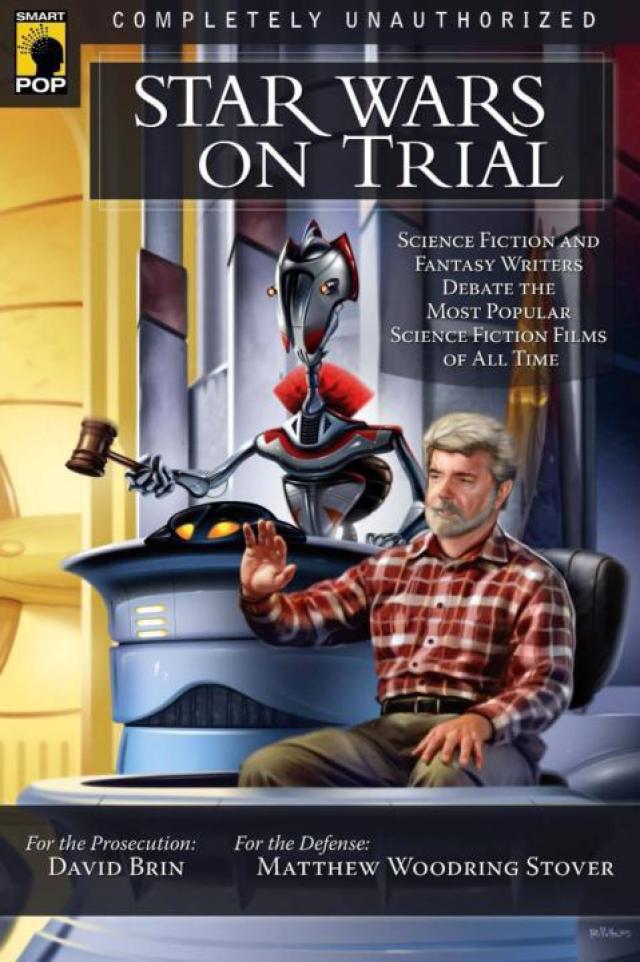
Debates on the authenticity of the Star Wars franchise and the hero-or-villain status of George Lucas are at the heart of these essays by bestselling science-fiction authors. The incredible popularity of the movies has led to the formation of strong emotions within the science fiction community on the strengths and flaws of the films, exemplified here by David Brin's attacks and Matthew Woodring Stover's defense of the movies. This intense examination of the epic works addresses a broad range of issues—from politics, religion, and the saga's overall logic to the impact of the series on bookshelf space as well as science-fiction film. The question Is George Lucas a hero for bringing science fiction to a mass audience or a villain who doesn't understand the genre he's working for? is discussed before a final "Judge's Verdict" on the greatness—or weakness—of the franchise is reached.About the AuthorDavid Brin is the author of 15 novels, including Earth, Startide Rising, and The Uplift War, and numerous short stories. He is the recipient of three Hugo Awards and one Nebula Award. He lives in Encinitas, CA. Matthew Woodring Stover is the author of the film novelization Stars Wars: Revenge of the Sith, as well as Blade of Tyshalle and Star Wars: Shatterpoint. He lives in Chicago, IL.
Read online
  • 48
183