




It's Not Funny If I Have to Explain It
Scott Adams
Comics & Graphic Novels / Self Help / Business
Office workers, cubicle squatters, and corporate drones everywhere read Dilbert in their morning papers and see their own bosses and coworkers in the frames of the strip, enacting on newsprint the weird rituals and bizarre activities that are conducted each day in the American workplace. The characters' names and hairstyles have been changed to protect their identities, but Dilbert's readers aren't fooled. After all, they spend every day with these idiots and lunatics.Jargon-spewing corporate zombies. The sociopath who checks voice mail on his speaker phone. The fascist information systems guy. The sadistic human resources director. The technophobic vice president. The power-mad executive assistant. The pursed-lip sycophant. The big stubborn dumb guy. They're Dilbert's coworkers, and chances are they're yours, too. If you know them, work with them, or dialogue with them about leveraging synergies to maximize shareholder value, then you'll recognize this comic...
Read online

Console Wars
Blake J. Harris
Nonfiction / Business / Videogames
Following the success of The Accidental Billionaires and Moneyball comes Console Wars--a mesmerizing, behind-the-scenes business thriller that chronicles how Sega, a small, scrappy gaming company led by an unlikely visionary and a team of rebels, took on the juggernaut Nintendo and revolutionized the video game industry.In 1990, Nintendo had a virtual monopoly on the video game industry. Sega, on the other hand, was just a faltering arcade company with big aspirations and even bigger personalities. But that would all change with the arrival of Tom Kalinske, a man who knew nothing about videogames and everything about fighting uphill battles. His unconventional tactics, combined with the blood, sweat and bold ideas of his renegade employees, transformed Sega and eventually led to a ruthless David-and-Goliath showdown with rival Nintendo.The battle was vicious, relentless, and highly profitable, eventually sparking a global corporate war that would be fought on...
Read online

Ten Great Events in History by James Johonnot
James Johonnot
History / Nonfiction / Business
THIS TITLE IS AN OUT-OF-COPYRIGHT BOOK. THE QUALITY OF THE CONVERTED EBOOK WILL VARY.
Read online
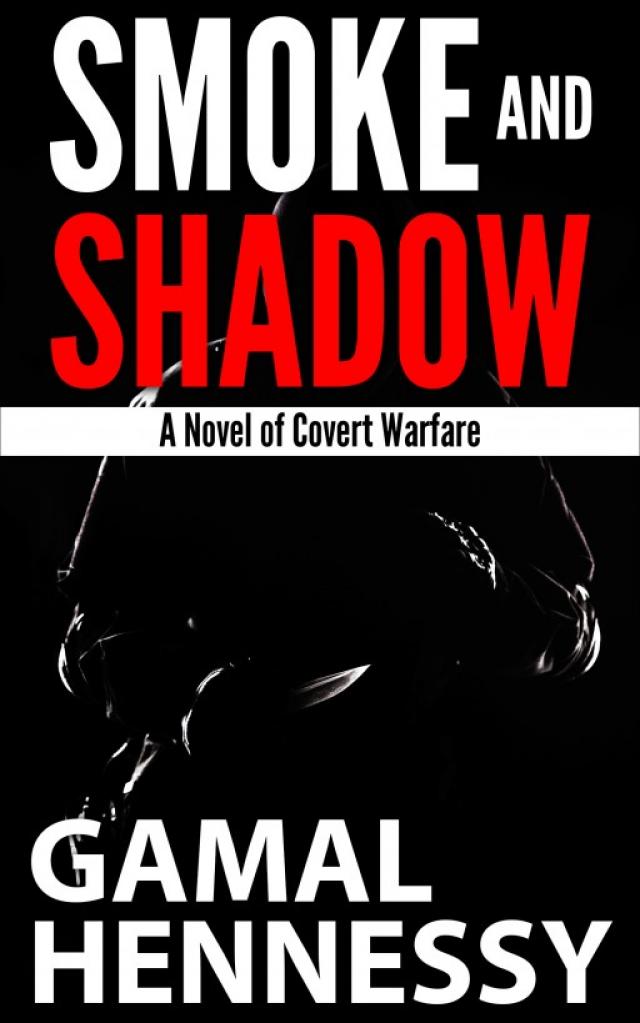
Smoke and Shadow
Gamal Hennessy
Business / Graphic Novels / Crime
In the dark world of espionage, Hamilton Chu and Harrison Trent are secret warriors. Driven by loyalty, excitement, and money, these modern day mercenaries travel around the world to spy, sabotage and kill. But how much of their humanity do they sacrifice with each turn of the knife or pull of the trigger? How can they succeed in missions where violence only makes things worse?
Read online

What Stays in Vegas
Adam Tanner
Business / Economics / Nonfiction
In What Stays in Vegas, Reuters journalist and Harvard fellow Adam Tanner exposes the greatest threat to online privacy. It's not the NSA, but private American firms. These are companies like Caesar's Entertainment in Las Vegas that operate behind the scenes, behind the tiny script of legal agreements, with little to no oversight. “This is the information age, and information is power!" screamed DocuSearch, "America's Premier Resource for Private Investigator Searches & Lookups" in 1996—and they were right.Despite the fact that Caesar's casinos are decades old and can't boast an array of singing gondoliers like the glitzy and glamorous Venetian, thousands of enthusiastic clients continue to pour through the ever-open doors of their hotels. The secret to the company's success lies in their one unrivaled asset: Caesar's Entertainment is able to track the activities of every hapless gambler that walks in. The company knows exactly what games he likes to play,...
Read online
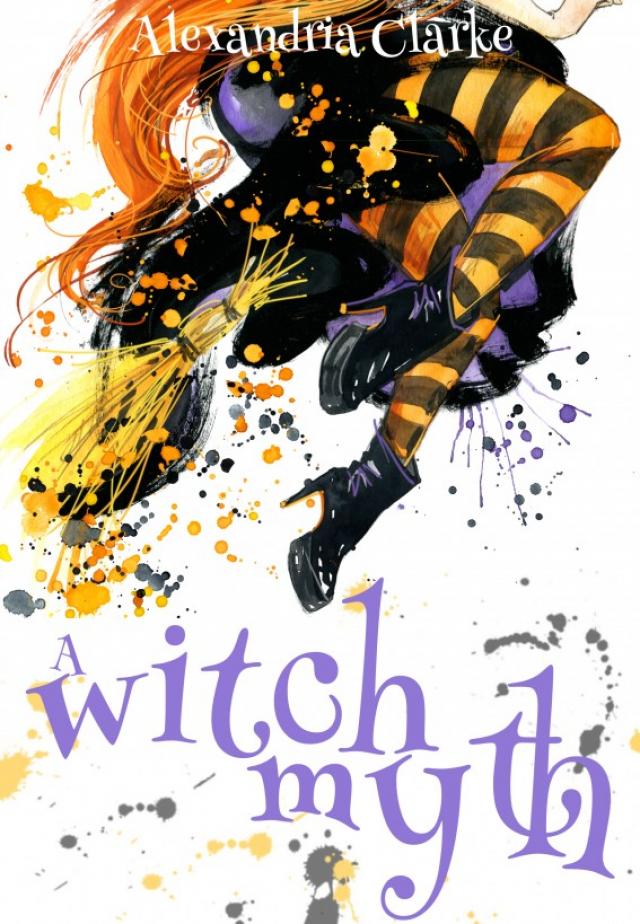
Witch Myth- A Yew Hollow Mystery
Roger Hayden
Thriller / Mystery Thriller / Business / amazon
Morgan Summers hates talking to ghosts, but when the victim of a ghastly murder asks her for help from beyond the grave, Morgan can’t say no. Soon, Morgan herself is blamed for the murder, and the town is out for blood. Can Morgan clear her name, discover the real killer, and help her new ghostly friend cross over to the next life?
Read online
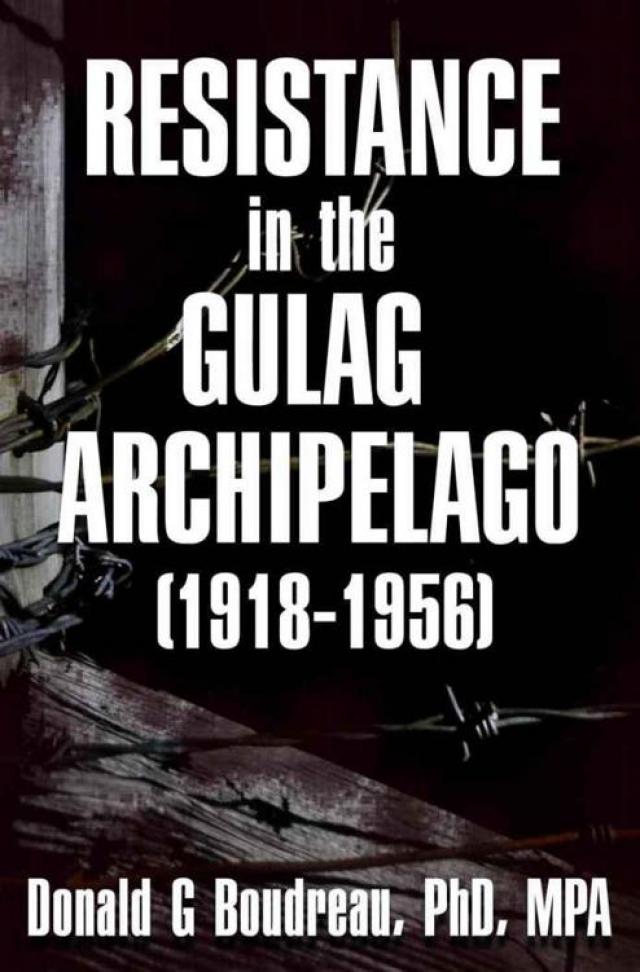
Resistance in the Gulag Archipelago
Donald G Boudreau
Business
An estimated 70 million people may have died in Soviet gulags. Such raises many questions: Where is the Warsaw Ghetto Uprising of the Stalinist reign of terror? Where are the six hundred prisoners armed with stolen guns and grenades attacking the Nazi guards, literally blowing up the death houses at Treblinka, and fleeing into the nearby Polish forests? Where are the suicide missions? How could the Russian people have gone to their incarceration, torture, and slaughter like lambs? Was fear of government retaliation so pervasive in the Soviet mind that it negated any and all forms of resisting, dissenting, and protesting? Why did the Jews, despite their relative few in number and the lateness of the hour, arm themselves in rebellion, while the Soviets of this period appear as pacifists in the face of a system which exemplified dialectical terrorism? The writer and Soviet dissident Alexander Solzhenitsyn (1918–2008), winner of the 1970 Nobel Prize in Literature, introduced the term Gulag to the Western world with the 1973 publication of his The Gulag Archipelago. The book likened the scattered prison camps to a “chain of islands” and depicted the Gulag as a system where people were essentially worked to death. In March 1940, for example, there were 53 separate camps and 423 labor colonies in the USSR. This essay attempts to glean the manifestations which occurred within the Gulag that can be characterized as inmates resisting, dissenting, and otherwise engaging in protesting-like activities. This objective is carried out by examining resistance in the Gulag archipelago through addressing the relevant portions of historical written works, including among other sources, Soviet historian Roy A. Medvedev’s Let History Judge: The Origins and Consequences of Stalinism (1972), Robert Goldston’s The Russian Revolution (1966), two of Solzhenitsyn’s finest novels, Cancer Ward (1972) and The First Circle (1972), and of course, through our primary source, Solzhenitsyn’s The Gulag Archipelago 1918-1956: An Experiment in Literary Investigation. Parts I-II (1973). While written in 1974 as the author’s senior thesis as a Political Science major college undergraduate, some might question the dated nature of this essay given the collapse of the Soviet Union in 1991, and other subsequent reforms that have since taken place in Russia. But such would be short term focused and misguided, in the sense that the subject remains useful given that contemporary Russia, the former Soviet Union has, in many ways, failed to come to grips with the Stalinist era in Soviet history and its resultant tragic legacy and thus, Stalin’s infamously true reputation as a tyrannical leader and mass murderer of his own people. As David Satter (2011) powerfully observes in It Was a Long Time Ago, And It Never Really Happened Anyway: Russia and the Communist Past (Yale University Press) the elemental failing of Russia’s leaders and people is their refusal in facing the moral depravity of its Soviet past, including its most savage manifestation: Joseph Stalin’s terror. In addition to containing its original selected bibliography, prepared in 1974, this essay has been improved upon by adding a new, post-1974 era bibliography, reflecting some of the relevant subsequent developments and their related writings regarding the Gulag camps, Stalinist Russia, and surely, Alexander Solzhenitsyn and his related literary works.
Read online


The Abducted: Odessa
Roger Hayden
Thriller / Mystery Thriller / Business / amazon
One year after defeating the Snatcher, Miriam settles back in to a quiet, low-key life, still working for the Phoenix PD. Meanwhile, a kidnapping occurs in a small Texas town. The kidnapper specifically mentions Miriam in a note left behind, prompting local officials to seek out Miriam for her assistance and expertise. But finding the missing child is just the first step in a twisted game of murde
Read online

King Dido
Alexander Baron
Thriller / Business / Young Adult
1911, London. The police collaborate with racketeers to keep an uneasy peace, periodically broken by violent gang wars. Dido Peach comes to prominence by breaking the unwritten rules of the street. For a brief time, he rules the underworld. His fall is spectacular, shaking even the callous and vicious neighbourhood in which he is trapped.
Read online

The Book of (Holiday) Awesome
Neil Pasricha
Well Being / Business / Humor and Comedy
There's nothing like the holidays. They bring out the best, and sometimes the worst, in everyone. Luckily, Neil Pasricha is here to remind us that not only are the holidays great, but there's actually even more to celebrate than we realize. From Christmas, Hanukkah, and Kwanzaa, to other holidays throughout the year, such as Mother's Day and Thanksgiving, The Book of (Holiday) Awesome will show you why holidays are...AWESOME. Making the first footprint in fresh snow When the in-laws leave Waking up and realizing it's Christmas Just barely wrapping a gift with that tiny scrap of leftover wrapping paper When they finally stop playing Christmas songs on the radio Knowing "Kwanzaa" is worth more Scrabble points than "Hanukkah" or "Christmas"
Read online
